Key points
- Both techniques are guideline-endorsed. Ambulatory phlebectomy and ultrasound-guided foam sclerotherapy are recommended for varicose tributaries in current European, American and UK guidance.
- Head-to-head evidence is thin. It rests on three small randomised trials of foam versus phlebectomy and an older trial using liquid sclerosant; the adequately powered comparison remains unpublished.
- Phlebectomy may be more durable; foam causes less early pain and bruising and a faster return to work (3.6 vs 13.7 days in one trial), at the cost of more pigmentation.
- Concomitant treatment reduces re-intervention. Treating tributaries at the same sitting as truncal ablation reduced re-intervention in pooled data, including a 2026 meta-analysis of randomised trials (RR 0.33), but the quality-of-life gains are small and early.
- Staging remains reasonable for smaller or uncertain tributaries, reassessed by duplex, and spares some patients any tributary procedure.
- ASVAL is an option for selected patients. In SAPTAP it was non-inferior for quality of life at 12 months, but 25.6% later needed truncal treatment.
- Match the technique to the vein. Large, palpable tributaries suit phlebectomy; tortuous, deep, non-palpable, ankle and residual veins often suit foam. Many patients receive both.
- Most day-to-day choices rest on anatomy, patient priorities and consensus, not trial data — the review labels which recommendations are evidence-based and which are practice-based.
Abstract
Varicose tributaries often persist after endovenous ablation of an incompetent saphenous trunk, and their management is one of the most common decisions in venous practice. Ambulatory phlebectomy and ultrasound-guided foam sclerotherapy (UGFS) are both endorsed by current European, American and UK guidance, but how they compare is less clear. This narrative review summarises the evidence on efficacy, safety, timing and cost. Direct comparative evidence is limited to three small randomised trials of foam versus phlebectomy and an older trial that used liquid rather than foam sclerosant; adequately powered trials remain unpublished or under way. On that evidence, phlebectomy may be more durable, while foam causes less early pain and bruising and allows a faster return to work, at the cost of more pigmentation. Treating tributaries at the same sitting as truncal ablation reduces re-intervention in pooled data, including a meta-analysis restricted to randomised trials, although the accompanying quality-of-life gains are small and early. A tributary-first strategy that preserves the saphenous trunk (ASVAL) was non-inferior in quality of life in one large trial, but a quarter of patients needed later truncal treatment. Most practical choices between the two techniques still rest on anatomy, patient priorities and expert consensus rather than trial data.
Introduction & Background
Varicose veins are common, affecting roughly a quarter to two-fifths of adults in population studies1,2. Most arise from superficial venous incompetence involving the great or small saphenous vein, an accessory saphenous vein, or the tributaries that drain into them. In the Clinical-Etiological-Anatomical-Pathophysiological (CEAP) classification, visible varicose veins of 3 mm or more are clinical class C23.
Endovenous thermal ablation is now first-line treatment for an incompetent saphenous trunk4,5. Closing the trunk removes the main source of reflux, but the bulging tributaries that patients see often persist. Truncal ablation alone proved sufficient in about 64% of patients in a large meta-analysis, leaving roughly a third who need further tributary treatment6.
Two techniques dominate that treatment: ambulatory phlebectomy and ultrasound-guided foam sclerotherapy (UGFS). Both are endorsed by current guidelines4,7. Conventional practice treats the refluxing trunk together with, or before, its tributaries. An alternative tributary-first strategy, ambulatory selective varices ablation under local anaesthesia (ASVAL), removes the tributaries and preserves the trunk8,9.
This narrative review aims to compare phlebectomy and foam sclerotherapy for varicose tributaries in terms of efficacy, safety, timing relative to truncal ablation and cost, and to set out where the evidence is strong, weak or absent.
Review
Methods
This is a narrative review, not a systematic one. PubMed/MEDLINE was searched from inception to 6 October 2026 using the following strategy: (phlebectomy OR "stab avulsion" OR "foam sclerotherapy" OR "ultrasound-guided sclerotherapy") AND (varicose OR tributar*) AND (concomitant OR staged OR sequential OR ASVAL OR randomized OR "meta-analysis"). The search returned 346 records. The Cochrane Central Register of Controlled Trials (CENTRAL), which includes trial registry records, was searched with the same strategy on the same date and returned 274 records. Titles, and abstracts where needed, were screened for relevance to the treatment of varicose tributaries. Current European, American, UK and International Union of Phlebology guidance and its cited evidence was also reviewed, reference lists of key papers were hand-searched, and targeted searches identified recent publications not yet indexed.
Randomised controlled trials (RCTs), systematic reviews and meta-analyses, clinical practice guidelines, and large prospective registries or cohorts reporting efficacy, safety or cost outcomes were prioritised. English-language publications were included. No formal risk-of-bias assessment or quantitative pooling was performed. Statements that reflect expert consensus or the author's practice, rather than trial evidence, are labelled as such.
The two techniques
Ambulatory phlebectomy (mini- or stab phlebectomy) removes the varicose vein mechanically. Under local or tumescent anaesthesia, 1–3 mm incisions are made along the pre-marked vein and segments are extracted with a phlebectomy hook. The incisions need no sutures. The modern technique was developed by the Swiss dermatologist Robert Muller in the 1950s and is widely regarded as the reference treatment for palpable tributaries10.
Ultrasound-guided foam sclerotherapy injects a detergent sclerosant, mixed with air or a physiological gas into a fine foam, directly into the vein under duplex guidance. Foam displaces blood rather than mixing with it, which prolongs contact with the vein wall, and it is visible on ultrasound as it travels11. The Tessari two-syringe method made physician-compounded foam simple and reproducible12. The treated vein becomes a fibrous cord that is reabsorbed over weeks to months.
| Feature | Ambulatory phlebectomy | Foam sclerotherapy (UGFS) |
|---|---|---|
| Mechanism | Physical removal of the vein | Chemical endothelial injury, then fibrosis |
| Anaesthesia | Local or tumescent | None |
| Commonly used for* | Palpable, superficial tributaries | Tortuous, deep, recurrent or residual veins |
| Time to final result | Immediate | Weeks to months (cord resorption) |
| Sessions | Usually one | Sometimes more than one* |
| Main early downside | Bruising and pain in the first week13 | Inflammation, trapped blood, later pigmentation11 |
*Practice consensus11 and the author's experience, not trial evidence.
Foam is more effective than liquid sclerosant for larger veins: in a randomised trial in the great saphenous vein (95 patients), foam eliminated reflux at 3 weeks in 85% versus 35% with liquid at the same concentration, and success at 2 years was 53% versus 12%14. Contraindications to sclerotherapy have been categorised in a 2023 International Union of Phlebology consensus15.
Measuring success
Studies define success differently, so their figures are not interchangeable:
- Anatomical success — the treated vein occluded or absent on duplex at a set time point.
- Clinical recurrence — visible varicose veins returning in the treated area.
- Re-intervention — a further procedure for residual or recurrent veins; the most patient-relevant measure.
- Patient-reported outcomes — disease-specific quality of life (Aberdeen Varicose Vein Questionnaire, AVVQ, scored 0–100, lower is better; or VEINES-QOL/Sym), clinical severity (Venous Clinical Severity Score, VCSS), pain and return to work.
Statistically significant differences in these scores are not necessarily clinically important. Published estimates of the minimal clinically important difference for the AVVQ are limited; one validation study, of a Thai-language version, placed it at 6.2 points16. Each figure below is reported with the measure it refers to.
Comparative evidence: foam versus phlebectomy
Head-to-head evidence is scarce, small and short-term. It does not establish that either technique is superior; it suggests a trade-off between durability and recovery. The European Society for Vascular Surgery (ESVS, 2022) and the Society for Vascular Surgery, American Venous Forum and American Vein and Lymphatic Society (SVS/AVF/AVLS, 2023) guidelines both recommend either technique for symptomatic varicose tributaries; the American recommendation is graded strong, on moderate-quality evidence4,7.
| Trial | Design | Outcome measured | Result | Main limitations |
|---|---|---|---|---|
| Zafarghandi et al., 201713 | Single-centre RCT, 90 patients (45 per arm), UGFS vs phlebectomy of small leg varicosities | Anatomical success on duplex; pain; morbidity; return to work | Success 95.5% vs 100% at 6 months (P = 0.11). Foam: less bruising at 1 week (11.1% vs 37.8%, P = 0.003), less moderate–severe pain (15.6% vs 44.4%, P = 0.003), return to work 3.6 vs 13.7 days (P < 0.001) | Small; 6-month follow-up; management of any saphenous reflux not reported; internal inconsistencies (see below) |
| de Roos et al., 200317 | RCT, liquid compression sclerotherapy vs phlebectomy | Clinical recurrence | 25% vs 2.1% at 1 year, favouring phlebectomy | Liquid sclerosant, not foam; a single vein territory |
| Vatsa and Pathak, 202218 | RCT, 64 patients (32 per arm), phlebectomy vs foam sclerotherapy | Primary symptom relief; procedure time; complications | Good symptom relief in 85% vs 60%, favouring phlebectomy; procedure 40.2 vs 25.3 minutes. Pigmentation, thrombophlebitis, bleeding and small ulcers more frequent after foam (P < 0.05) | Small; follow-up and saphenous management not reported in the abstract; limited statistical reporting |
| Sellés Dechent et al., 200819 | RCT, 105 patients; distal venous segment treated by phlebectomy vs foam during saphenectomy | Clinical recurrence | Overall recurrence 35.3% vs 57.4% (P < 0.001) and trunk recurrence 17.7% vs 38.9% (P = 0.028), favouring phlebectomy; tributary (collateral) recurrence similar, 9.8% vs 11.1% | Older open-surgery context; distal saphenous segment rather than tributaries alone; abstract conclusion ambiguously worded |
| Belramman et al., Imperial College20 | Single-centre RCT, target 160 patients, foam vs phlebectomy alongside truncal ablation | Re-intervention | Not published; registry status last listed as unknown (NCT03416413) | — |
Two cautions apply to the Zafarghandi trial. Its methods describe duplex assessment at 1 month, yet success is reported at 6 months. Its deep vein thrombosis (DVT) rate of 2.6% in the phlebectomy arm cannot arise from 45 patients (one patient is 2.2%, two are 4.4%). Neither undermines its findings on pain and recovery, but both lower confidence in its precision.
The de Roos trial used liquid sclerosant, which is less effective than foam for larger veins14, so its recurrence gap may overstate the difference with modern UGFS.
For the saphenous trunk itself, the CLASS trial (798 patients) found disease-specific quality of life at 5 years was better after laser ablation or surgery than after foam21,22. That result concerns truncal treatment and should not be extrapolated to tributaries.
Safety and complications
Serious complications are rare with both procedures, but their profiles differ. Phlebectomy's morbidity is front-loaded: bruising and pain in the first week13. Foam's is mostly delayed and cosmetic, or rare and systemic11,23.
| Complication | Ambulatory phlebectomy | Foam sclerotherapy |
|---|---|---|
| Bruising at 1 week (RCT) | 37.8%13 | 11.1%13 |
| Superficial thrombophlebitis | 4.4% (10 of 227)9 | About 4.4% across series23 |
| Hyperpigmentation | 4.8% (11 of 227)9 | 10–30% across series; usually fades23 |
| Postoperative bleeding | 1.8% (4 of 227)9 | Not a typical complication |
| Telangiectatic matting | Reported; not well quantified24 | 15–24%23 |
| Nerve injury | Recognised, mainly sensory24; none in 227 patients9 | About 0.2%23 |
| Visual disturbance | Not applicable | 0.09–2% in series of 500 or more patients; average about 1.4%; none permanent25,26 |
| Stroke | Not applicable | About 0.01%; linked to right-to-left shunts such as a patent foramen ovale23,27 |
| DVT | None in 227 patients9 | 1–3% across series23 |
| Complications per session (registry) | — | 0.58% with foam vs 0.22% with liquid28 |
The phlebectomy figures come from the isolated-phlebectomy arm of the SAPTAP trial9. Complications there were recorded at 3 months, and at 12 months in the 25.6% who later had truncal treatment, so a few events may relate to that second procedure. Foam figures come mainly from case series, registries and reviews that include truncal treatment, so comparisons between the two columns are approximate.
In a prospective study of 1,025 patients having foam to the saphenous trunks, 2.6% had transient side effects such as migraine, visual disturbance or chest tightness29. The French registry of 12,173 sessions likewise found a low overall complication rate30. The European guideline sets out precautions, including limits on foam volume per session and duplex guidance11. A previous severe neurological or cardiac event after sclerotherapy is an absolute contraindication to further sclerotherapy15.
Timing: concomitant, staged or tributaries first
The SVS guideline favours treating tributaries at the same sitting as truncal ablation, with a strong recommendation for great and small saphenous reflux7. NICE likewise advises considering treatment of incompetent tributaries at the same time as truncal ablation5.
- Concomitant treatment versus ablation alone. A 2026 meta-analysis of six RCTs (432 patients) compared ablation with immediate phlebectomy or foam against ablation alone. Combined treatment reduced re-intervention (relative risk [RR] 0.33, 95% confidence interval [CI] 0.18–0.62). It improved AVVQ at 6 weeks (mean difference 5.24, 95% CI 2.53–7.94) and VCSS at 12 months (mean difference 0.86, 95% CI 0.40–1.31). Thrombophlebitis, nerve injury, pain and serious adverse events did not differ31. The AVVQ gain is below the one published estimate of a clinically important difference16, and the VCSS gain is under one point. In the AVULS trial (101 patients), 36% of the delayed group needed further treatment versus 2% after simultaneous phlebectomy (P < 0.001), with better VCSS up to 12 months32. In the 50-patient trial of Carradice et al., concomitant phlebectomy reduced secondary procedures and improved quality of life at 3 months33; at 5 years both strategies gave good results, with the greatest improvement after concomitant treatment34. A second 2026 meta-analysis of nine studies (1,954 patients, including observational designs) found a pooled odds ratio (OR) for re-intervention of 0.15 (95% CI 0.04–0.62), with very high heterogeneity (I² = 93%)35. These meta-analyses overlap, both drawing on AVULS and the Carradice cohort31,35, so they are not independent confirmations.
- Staged treatment. The 2020 Aherne meta-analysis (15 studies, 6,915 limbs) found re-intervention in 6.3% after concomitant versus 36.1% after staged treatment (RR 0.21, 95% CI 0.07–0.62; I² = 90%). Complications (RR 1.14, 95% CI 0.67–1.93) and DVT (RR 1.41, 95% CI 0.72–2.77) were similar. Its subgroup of randomised trials, however, showed no difference in re-intervention6. A 3-year RCT after mechanochemical ablation (85 patients) found re-intervention in 11.4% after staged foam versus 4.9% after concomitant phlebectomy (OR 2.5, 95% CI 0.46–13.67; P = 0.435); a non-inferiority analysis suggested staging may be inferior for quality of life36. Because the staged arm received foam and the concomitant arm phlebectomy, timing and technique are confounded in this trial. In a 2026 prospective non-randomised study (152 patients), tributaries had regressed by 3 months in 85% after concomitant foam versus 50.6% with staging, but staging reduced sclerosant use and hyperpigmentation, with similar satisfaction37. The multicentre FinnTrunk RCT (powered for 66 patients) compared laser ablation alone with laser ablation plus concomitant foam to the tributaries. At 3 months, 20.7% of the ablation-alone group sought further foam treatment versus none after concomitant treatment (P < 0.001), and VCSS was slightly higher after ablation alone (median 2.0 vs 1.0; P < 0.001). Procedures were 9 minutes shorter without concomitant foam, and complications and quality of life were similar; the authors judged ablation alone an acceptable but slightly less effective alternative38.
- ASVAL (tributaries first, trunk preserved). In SAPTAP (464 patients), isolated phlebectomy with optional later truncal ablation was non-inferior to thermal ablation plus phlebectomy at 12 months. The VEINES-QOL difference was −1.1 points (95% CI −2.7 to 0.1) against a pre-set margin of −2.7; VEINES-Sym was −0.7 (−2.5 to 0.0). Anatomical success at the trunk, however, was 57.8% versus 95.5%, VCSS was slightly worse (1.86 vs 1.22; P = 0.001), and 25.6% needed later truncal treatment9. Observational studies report loss of truncal reflux in about 50–66% of patients at 1 year, far less often when reflux extends below mid-thigh39,40. The ESVS guideline gives ASVAL a weak (class IIb) recommendation4,9.
Taken together, concomitant treatment consistently reduces the need for further tributary treatment, in pooled observational data, in a meta-analysis restricted to RCTs and in the FinnTrunk trial, although an earlier randomised subgroup was inconclusive. The accompanying gains in quality of life and severity scores are small and early. Concomitant treatment is a reasonable default for large, clearly symptomatic tributaries. Staging suits smaller or uncertain tributaries, reassessed by duplex at follow-up, and spares a proportion of patients any tributary procedure. ASVAL is an option for selected patients with limited disease who prefer to preserve the trunk and accept about a one-in-four chance of later truncal treatment.
Choosing between the techniques
Matching the technique to the vein generally works better than using one method for everything, and many patients receive both. The basis column shows how much of each choice rests on evidence; most rests on consensus or experience.
| Clinical situation | Usually preferred | Basis |
|---|---|---|
| Large, palpable tributary | Phlebectomy | Lower recurrence after phlebectomy in two RCTs, one using liquid sclerosant17 and one in the distal saphenous segment19; low certainty |
| Patient prioritises fast recovery | Foam | RCT: less pain, return to work 3.6 vs 13.7 days13 |
| Pigmentation would be unacceptable | Phlebectomy | Pigmentation 4.8% after phlebectomy in one trial9 vs 10–30% across mixed foam series23; not directly comparable |
| Tortuous, deep or non-palpable vein | Foam | Expert consensus11 |
| Recurrence due to neovascularisation | Either; foam often easier in scarred tissue | Guideline good-practice statement7; technique choice is author's practice |
| Ankle or foot veins, fragile skin | Foam | Author's practice |
| Residual veins after truncal ablation | Foam or phlebectomy | Staging evidence6,37; technique choice is author's practice |
| Clusters of varicosities | Phlebectomy, or transilluminated powered phlebectomy where available | Guideline suggestion, weak7 |
| Sclerosant hypersensitivity, or a previous severe neurological or cardiac event after sclerotherapy | Phlebectomy | Absolute contraindications to sclerotherapy15 |
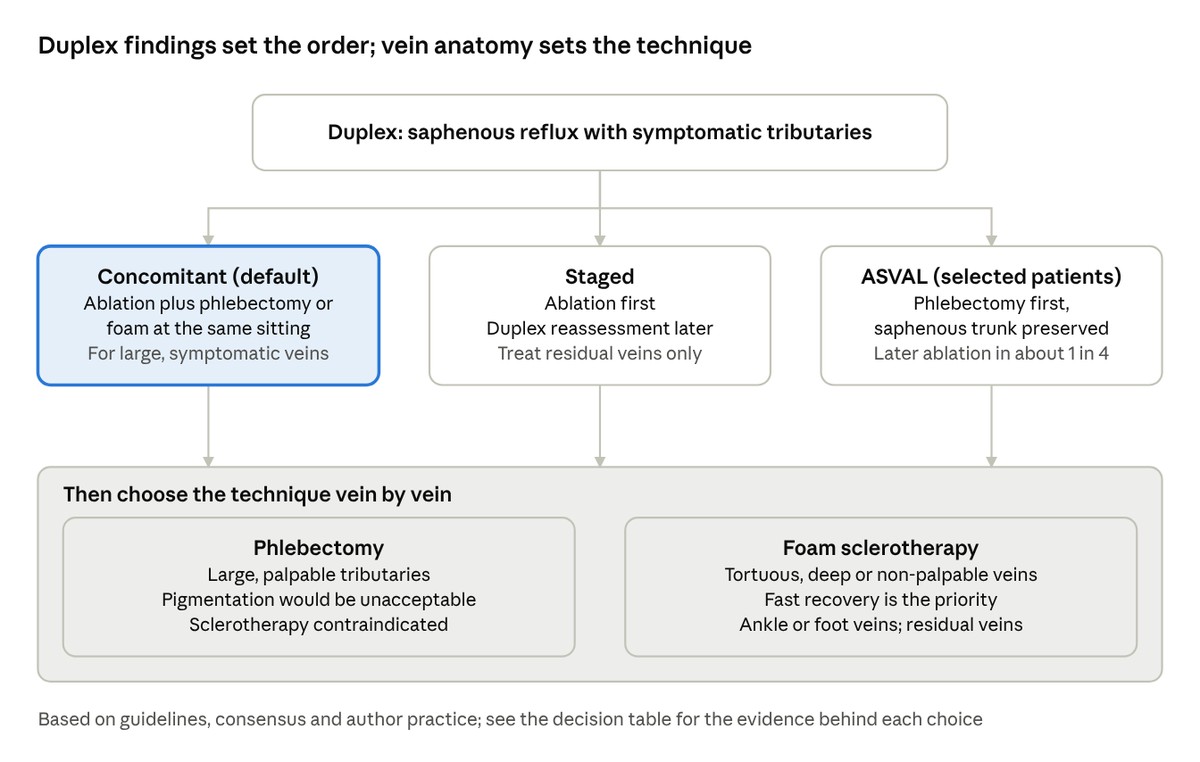
Figure 1 brings the strategy and technique choices together. The pathway is consensus-based and has not been validated in trials.
Unless ASVAL has been deliberately chosen, tributaries should be treated together with, or after, the feeding reflux identified on duplex4,7.
Costs and aftercare
No published study compares the cost of foam and phlebectomy for tributaries. In SAPTAP, the phlebectomy-first strategy cost €1,030 per patient versus €1,660 for ablation plus phlebectomy, a saving of €630, in the Dutch setting9. For the trunk, CLASS cost-effectiveness modelling favoured laser ablation over foam22. Costs in other health systems, including those funded by medical schemes, may differ substantially.
Compression after either procedure is widely used, but regimens vary; NICE advises that compression after interventional treatment should not be used for more than 7 days5. In SAPTAP, for example, patients wore a stocking continuously for 48 hours and then by day for at least a week9.
Other options and evidence gaps
The broader comparison of surgery with sclerotherapy has a long history. A Cochrane review found sclerotherapy better at 1 year but surgery better by 3–5 years, and concluded that there was insufficient evidence to prefer either; it also reports that recurrence after sclerotherapy in the de Roos trial rose to 37.5% at 2 years41.
Foam may be physician-compounded or a commercially manufactured microfoam, and the SVS guideline recommends either for tributaries7. Transilluminated powered phlebectomy is a suggested alternative for clusters of varicosities7. In two RCTs it needed far fewer incisions than stab phlebectomy but did not improve cosmesis or recurrence, and one found more bruising, more pain at 6 weeks and slower early recovery42,43. Endovenous laser ablation of tributaries is an emerging option, now covered by a 2025 Japanese Society of Phlebology guideline supplement, though comparative data remain limited; one comparative study has set concomitant tributary laser ablation against foam sclerotherapy during truncal laser ablation44,45.
Few of the studies reviewed here report a validated measure of cosmetic outcome, although appearance often drives patients' choice between the techniques. The adequately powered randomised comparison of foam and phlebectomy20 remains unpublished and is the most important missing piece of evidence. A further randomised comparison of foam and phlebectomy46 and a multicentre trial of simultaneous versus staged tributary treatment after radiofrequency ablation47 are registered.
Limitations of this review
This is a narrative review by a single author, without duplicate screening, formal risk-of-bias assessment or meta-analysis, and study selection may reflect the author's judgement. Only English-language publications were included, and two databases were searched. Some recent or less accessible studies, including two of the comparative trials and the FinnTrunk trial18,19,38, were assessed from their published abstracts rather than full texts. The author performs both procedures, which may influence the practice-based recommendations; these are labelled as such.
Conclusions
Ambulatory phlebectomy and ultrasound-guided foam sclerotherapy are both legitimate, guideline-endorsed treatments for varicose tributaries. The limited head-to-head evidence suggests phlebectomy may be more durable, while foam offers a quicker, less painful recovery with more cosmetic side effects. Treating tributaries at the same sitting as truncal ablation reduces the need for further treatment, but the gains in quality of life are small and early; staged treatment and the tributary-first ASVAL strategy remain reasonable in selected patients. Most day-to-day choices between the two techniques rest on vein anatomy, patient priorities and expert consensus. The adequately powered randomised comparison now awaited should be reported before firmer recommendations are made.
How to cite
Blignaut J. Management of Varicose Tributaries: Phlebectomy, Foam Sclerotherapy and Timing Relative to Truncal Ablation. Narrative review. Vein Centres South Africa; October 2026. Available from: https://www.veinsurgery.co.za/for-doctors/varicose-tributaries-foam-sclerotherapy-phlebectomy/
References
- Evans CJ, Fowkes FG, Ruckley CV, Lee AJ: Prevalence of varicose veins and chronic venous insufficiency in men and women in the general population: Edinburgh Vein Study. J Epidemiol Community Health. 1999, 53:149-53. https://doi.org/10.1136/jech.53.3.149
- Rabe E, Guex JJ, Puskas A, Scuderi A, Fernandez Quesada F: Epidemiology of chronic venous disorders in geographically diverse populations: results from the Vein Consult Program. Int Angiol. 2012, 31:105-15.
- Lurie F, Passman M, Meisner M, et al.: The 2020 update of the CEAP classification system and reporting standards. J Vasc Surg Venous Lymphat Disord. 2020, 8:342-52. https://doi.org/10.1016/j.jvsv.2019.12.075
- De Maeseneer MG, Kakkos SK, Aherne T, et al.: European Society for Vascular Surgery (ESVS) 2022 clinical practice guidelines on the management of chronic venous disease of the lower limbs. Eur J Vasc Endovasc Surg. 2022, 63:184-267. https://doi.org/10.1016/j.ejvs.2021.12.024
- National Institute for Health and Care Excellence: Varicose veins: diagnosis and management (CG168). NICE, London; 2013 (last updated March 2025). https://www.nice.org.uk/guidance/cg168
- Aherne TM, Ryan ÉJ, Boland MR, et al.: Concomitant vs. staged treatment of varicose tributaries as an adjunct to endovenous ablation: a systematic review and meta-analysis. Eur J Vasc Endovasc Surg. 2020, 60:430-42. https://doi.org/10.1016/j.ejvs.2020.05.028
- Gloviczki P, Lawrence PF, Wasan SM, et al.: The 2023 Society for Vascular Surgery, American Venous Forum, and American Vein and Lymphatic Society clinical practice guidelines for the management of varicose veins of the lower extremities. Part II. J Vasc Surg Venous Lymphat Disord. 2024, 12:101670. https://doi.org/10.1016/j.jvsv.2023.08.011
- Pittaluga P, Chastanet S, Rea B, Barbe R: Midterm results of the surgical treatment of varices by phlebectomy with conservation of a refluxing saphenous vein. J Vasc Surg. 2009, 50:107-18. https://doi.org/10.1016/j.jvs.2008.12.067
- Scheerders ERY, van der Velden SK, Goossens LMA, et al.: A randomized clinical trial of isolated ambulatory phlebectomy versus saphenous thermal ablation with concomitant phlebectomy (SAPTAP trial). Br J Surg. 2023, 110:333-42. https://doi.org/10.1093/bjs/znac388
- Olivencia JA: Ambulatory phlebectomy turned 2400 years old. Dermatol Surg. 2004, 30:704-8. https://doi.org/10.1111/j.1524-4725.2004.30210.x
- Rabe E, Breu FX, Cavezzi A, et al.: European guidelines for sclerotherapy in chronic venous disorders. Phlebology. 2014, 29:338-54. https://doi.org/10.1177/0268355513483280
- Tessari L, Cavezzi A, Frullini A: Preliminary experience with a new sclerosing foam in the treatment of varicose veins. Dermatol Surg. 2001, 27:58-60.
- Zafarghandi MR, Farsavian H, Davoudi M, Farsavian AA: Outcome of ultrasonography-guided foam sclerotherapy versus stab avulsion ambulatory phlebectomy in the treatment of varicosis in small veins of the leg: a single blinded randomized clinical trial. Iran J Radiol. 2017, 14:e21742. https://doi.org/10.5812/iranjradiol.21742
- Ouvry P, Allaert FA, Desnos P, Hamel-Desnos C: Efficacy of polidocanol foam versus liquid in sclerotherapy of the great saphenous vein: a multicentre randomised controlled trial with a 2-year follow-up. Eur J Vasc Endovasc Surg. 2008, 36:366-70. https://doi.org/10.1016/j.ejvs.2008.04.010
- Wong M, Parsi K, Myers K, et al.: Sclerotherapy of lower limb veins: indications, contraindications and treatment strategies to prevent complications – a consensus document of the International Union of Phlebology-2023. Phlebology. 2023, 38:205-58. https://doi.org/10.1177/02683555231151350
- Siribumrungwong B, Noorit P, Reanpang T, et al.: Reliability, validity, and minimal clinically important differences for the Thai-version of the Aberdeen Varicose Vein Questionnaire (AVVQ-Thai) in patients with chronic venous disease. F1000Res. 2024, 13:486.
- de Roos KP, Nieman FH, Neumann HA: Ambulatory phlebectomy versus compression sclerotherapy: results of a randomized controlled trial. Dermatol Surg. 2003, 29:221-6. https://doi.org/10.1046/j.1524-4725.2003.29053.x
- Vatsa A, Pathak S: Comparison of ambulatory phlebectomy and compression sclerotherapy for varicose veins. J Cardiovasc Dis Res. 2022, 13:1283-7.
- Sellés Dechent R, Arenas Ricart J, Ballester Ibáñez C, et al.: Phlebectomies or foam sclerosis for treatment of the distal venous segment in the 3-S saphenectomy technique. Cir Esp. 2008, 84:92-9.
- Belramman A, Bootun R, Lane TRA, Davies AH: Foam sclerotherapy versus ambulatory phlebectomy for the treatment of varicose vein tributaries: study protocol for a randomised controlled trial. Trials. 2019, 20:392. https://doi.org/10.1186/s13063-019-3398-0
- Brittenden J, Cotton SC, Elders A, et al.: A randomized trial comparing treatments for varicose veins. N Engl J Med. 2014, 371:1218-27. https://doi.org/10.1056/NEJMoa1400781
- Brittenden J, Cooper D, Dimitrova M, et al.: Five-year outcomes of a randomized trial of treatments for varicose veins. N Engl J Med. 2019, 381:912-22. https://doi.org/10.1056/NEJMoa1805186
- Cavezzi A, Parsi K: Complications of foam sclerotherapy. Phlebology. 2012, 27 Suppl 1:46-51. https://doi.org/10.1258/phleb.2012.012s09
- Olivencia JA: Complications of ambulatory phlebectomy: review of 1000 consecutive cases. Dermatol Surg. 1997, 23:51-4.
- Willenberg T, Smith PC, Shepherd A, Davies AH: Visual disturbance following sclerotherapy for varicose veins, reticular veins and telangiectasias: a systematic literature review. Phlebology. 2013. https://doi.org/10.1258/phleb.2012.012051
- Gillet JL, Donnet A, Lausecker M, Guedes JM, Guex JJ, Lehmann P: Pathophysiology of visual disturbances occurring after foam sclerotherapy. Phlebology. 2010, 25:261-6. https://doi.org/10.1258/phleb.2009.009068
- Forlee MV, Grouden M, Moore DJ, Shanik G: Stroke after varicose vein foam injection sclerotherapy. J Vasc Surg. 2006, 43:162-4. https://doi.org/10.1016/j.jvs.2005.09.032
- Guex JJ: Complications of sclerotherapy: an update. Dermatol Surg. 2010. https://doi.org/10.1111/j.1524-4725.2009.01409.x
- Gillet JL, Guedes JM, Guex JJ, et al.: Side-effects and complications of foam sclerotherapy of the great and small saphenous veins: a controlled multicentre prospective study including 1025 patients. Phlebology. 2009, 24:131-8. https://doi.org/10.1258/phleb.2008.008063
- Guex JJ, Allaert FA, Gillet JL, Chleir F: Immediate and midterm complications of sclerotherapy: report of a prospective multicenter registry of 12,173 sclerotherapy sessions. Dermatol Surg. 2005, 31:123-8. https://doi.org/10.1097/00042728-200502000-00001
- Xie Y, Cui L, Geng C, et al.: Combined endovenous ablation with phlebectomy or foam sclerotherapy versus endovenous ablation alone for lower limb varicose veins: a systematic review and meta-analysis. Phlebology. 2026 (online ahead of print). https://doi.org/10.1177/02683555261443824
- Lane TRA, Kelleher D, Shepherd AC, Franklin IJ, Davies AH: Ambulatory varicosity avulsion later or synchronized (AVULS): a randomized clinical trial. Ann Surg. 2015, 261:654-61. https://doi.org/10.1097/SLA.0000000000000790
- Carradice D, Mekako AI, Hatfield J, Chetter IC: Randomized clinical trial of concomitant or sequential phlebectomy after endovenous laser therapy for varicose veins. Br J Surg. 2009, 96:369-75. https://doi.org/10.1002/bjs.6556
- El-Sheikha J, Nandhra S, Carradice D, et al.: Clinical outcomes and quality of life 5 years after a randomized trial of concomitant or sequential phlebectomy following endovenous laser ablation for varicose veins. Br J Surg. 2014, 101:1093-7. https://doi.org/10.1002/bjs.9565
- Bertini P, Manestar A, Chaves Brait CM, Quarto G, Zamboni P: Does concomitant treatment of tributary varicose veins improve the results of standard endovenous thermal ablation of the great or small saphenous trunk? A systematic review and metanalysis. Veins Lymphatics. 2026, 15:14901. https://doi.org/10.4081/vl.2026.14901
- Rahman T, Noronen K, Vähäaho S, Heinola I, Venermo M, Halmesmäki K: Three-year follow-up of a randomized controlled trial comparing concomitant and staged treatment of varicose veins following mechanochemical ablation of the great saphenous vein. J Vasc Surg Venous Lymphat Disord. 2025, 13:102255. https://doi.org/10.1016/j.jvsv.2025.102255
- Wołkowski M, Urbanek T, Wołkowski K, Biolik G, Kuczmik W: Clinical trial of concomitant vs staged foam sclerotherapy of varicose veins following axial thermal ablation. J Vasc Surg Venous Lymphat Disord. 2026, 14:102518. https://doi.org/10.1016/j.jvsv.2026.102518
- Rahman T, Viljamaa J, Firoozi K, et al.: Early outcomes of a randomised controlled trial comparing concomitant with staged tributary treatment as an adjunct to endovenous laser ablation of the saphenous trunk: the FinnTrunk study. Eur J Vasc Endovasc Surg. 2026, 71:1071-9. https://doi.org/10.1016/j.ejvs.2026.01.029
- Biemans AA, van den Bos RR, Hollestein LM, et al.: The effect of single phlebectomies of a large varicose tributary on great saphenous vein reflux. J Vasc Surg Venous Lymphat Disord. 2014, 2:179-87. https://doi.org/10.1016/j.jvsv.2013.11.003
- Zolotukhin IA, Seliverstov EI, Zakharova EA, Kirienko AI: Short-term results of isolated phlebectomy with preservation of incompetent great saphenous vein (ASVAL procedure) in primary varicose veins disease. Phlebology. 2017, 32:601-7. https://doi.org/10.1177/0268355516674415
- Rigby KA, Palfreyman SJ, Beverley C, Michaels JA: Surgery versus sclerotherapy for the treatment of varicose veins. Cochrane Database Syst Rev. 2004, 4:CD004980. https://doi.org/10.1002/14651858.CD004980
- Aremu MA, Mahendran B, Butcher W, et al.: Prospective randomized controlled trial: conventional versus powered phlebectomy. J Vasc Surg. 2004, 39:88-94.
- Chetter IC, Mylankal KJ, Hughes H, et al.: Randomized clinical trial comparing multiple stab incision phlebectomy and transilluminated powered phlebectomy for varicose veins. Br J Surg. 2006, 93:169-74.
- Hirokawa M, Utoh J, Sugiyama S, et al.: Supplement of clinical practice guidelines for endovenous thermal ablation for varicose veins 2019: laser ablation of varicose tributaries. Ann Vasc Dis. 2025, 18.
- Wang JC, Li Y, Li GY, et al.: A comparison of concomitant tributary laser ablation and foam sclerotherapy in patients undergoing truncal endovenous laser ablation for lower limb varicose veins. J Vasc Interv Radiol. 2018, 29:781-9. https://doi.org/10.1016/j.jvir.2018.01.774
- Comparison of two minimally invasive treatments for varicose veins: foam injection vs small vein removal. A randomized study. Clinical Trials Registry – India, CTRI/2025/07/090624. 2025.
- Comparison of simultaneous or staged treatment of tributary veins for lower extremity varicose veins: a multicenter randomized controlled study. Chinese Clinical Trial Registry, ChiCTR2500112483. 2025.